Getting there, the crossing and the day
Robben Island tour: what to expect
The ferry crossing, what you may see from the boat, weather and cancellations, what to wear, language, children and access, checked against official sources.
Check dates and availability ↗Quick answer
Plan about 3.5 to 4 hours from the Nelson Mandela Gateway at the V&A Waterfront: a ferry of 30 to 60 minutes each way, a bus tour of the island and a guided walk through the prison. Dress for wind and sun, bring ID, and be at the Gateway at least 30 minutes before departure. The tour is in English only, and the museum can cancel or change sailings without notice.
Getting to the Nelson Mandela Gateway
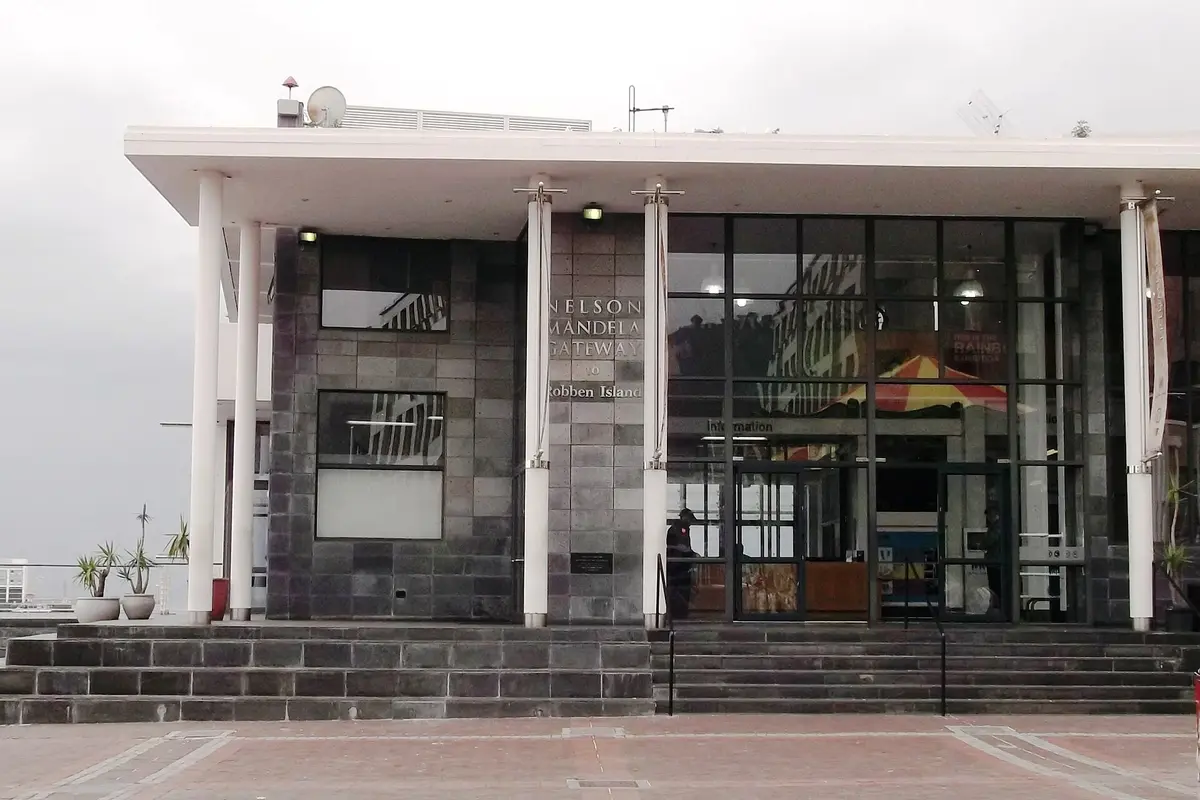
Every visit starts and ends at the Nelson Mandela Gateway, which sits in the Clock Tower District of the V&A Waterfront. The booking's meeting point is next to the Clock Tower: go up the steps at the entrance and join the queue for the Robben Island ferry. We haven't listed bus or train routes here, because they change; use your accommodation or a live map for the best way to the Waterfront that day. Leave a margin, because the museum's rules are strict about arrival times. The next section covers them.
Check-in, ID and the departure gate
The museum says to arrive at least 30 minutes before departure. Boarding gates close 10 minutes before it, and a missed departure means no refund and no rescheduling on a museum-sold ticket. Bring a passport or ID card, because identification is checked against the ticket details. Security checks happen at the Gateway. The museum is a gun-free zone. It allows cameras for personal use only, with no drones and no tripods. The booking also asks for the full names and nationalities of every traveller, so keep your confirmation on your phone or printed; the museum accepts both digital and printed tickets.
The crossing
The ferry takes between 30 and 60 minutes each way, depending on the boat the museum uses that day. The booking lists 30 minutes and mentions views of Table Mountain behind you. The museum says the boat trip gives a chance to see seabirds and mammals, including Cape fur seals, southern right whales, and dusky and Heaviside's dolphins. That is a chance, not a promise. The island's name comes from the Dutch word for seals. If you tend to feel seasick, the museum advises taking seasickness tablets about an hour before boarding, and the booking lists the tour as not suitable for people prone to seasickness.
Weather and cancellations
The museum's ticket terms say it reserves the right to cancel voyages or change departure times without notice. It says it refunds tickets for voyages it cancels due to adverse weather or ferry operational difficulties. Wikipedia describes the island as open all year, weather permitting. The museum's own conservation page says the island has stronger winds and more extreme temperatures than Cape Town itself. None of the sources we checked says how often sailings are cancelled or in which season, so we won't guess. Book early in your stay, keep a spare day if you can, and read the cancellation terms in your confirmation.
Landing and the bus tour
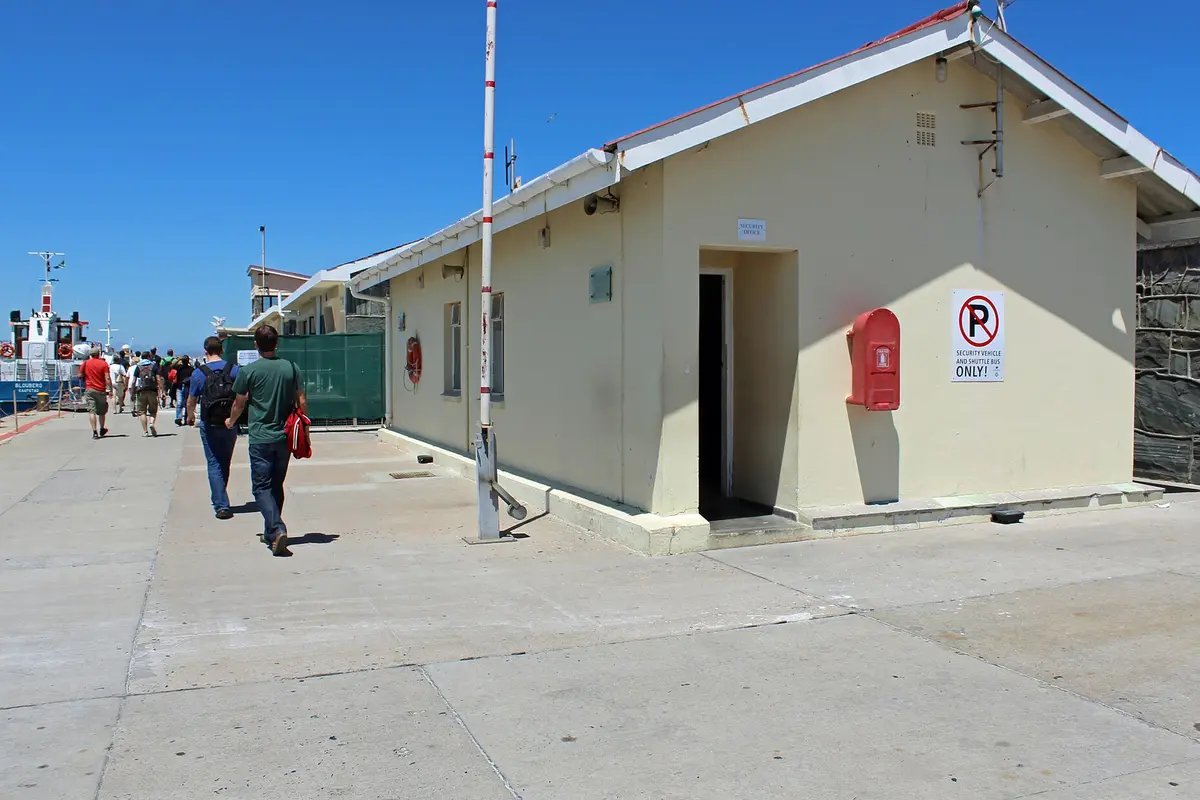
The ferry lands at Murray's Bay Harbour on the island's east coast. A short walk takes you to the buses. On the way you pass buildings and a high wall built by prisoners in the 1960s, used for family and lawyer visits. You meet your guide once you are on the bus. The route covers the graveyard of people who died of leprosy, the lime quarry, Robert Sobukwe's house, the Bluestone quarry, the army and navy bunkers and the Maximum Security Prison. The tour finishes with a viewing of Mandela's cell, then it is back to the ferry. The itinerary lists a second crossing of the same length back to the Gateway, where the booking ends.
Read next: Banishment, Leprosy and War: The Island Before Mandela
The lime quarry and the prison
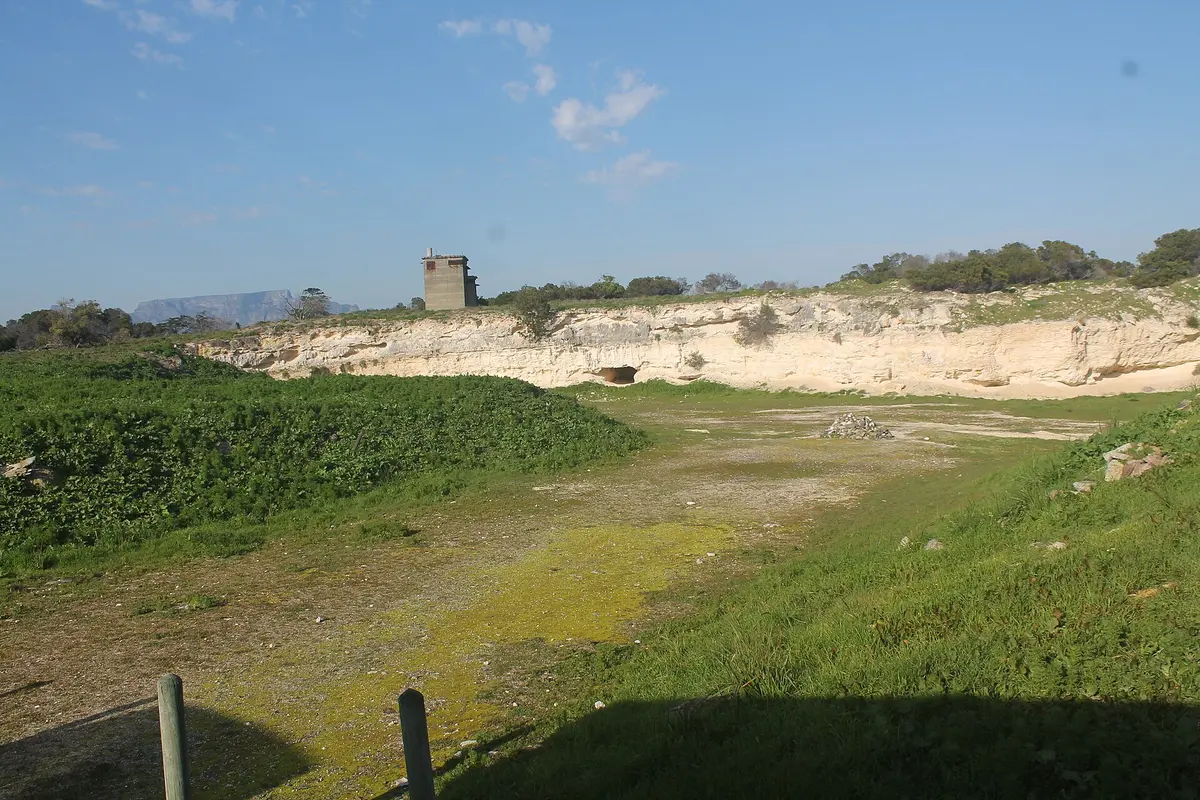
The quarry matters because of what happened there. According to Wikipedia's account of Mandela's imprisonment, political prisoners were reassigned to the lime quarry in January 1965. Mandela was initially forbidden to wear sunglasses, and the glare from the lime permanently damaged his eyesight. The prison is the other major stop. UNESCO says the island's buildings, in particular the late 20th-century maximum security prison for political prisoners, witness the triumph of democracy and freedom over oppression and racism. Expect a sombre morning, not a leisurely stroll.
Read next: The Lime Quarry: Hard Labour and the Island University
Wildlife on the island, and the penguin question
The museum describes the island as a safe haven for birds, including some endangered species, and as home to mammals such as bontebok, springbok, eland and fallow deer, as well as ostriches and tortoises. Penguins are the question people ask most. Wikipedia says the original African penguin colony was exterminated by 1800 and that a new colony has grown since 1983, though numbers have fallen since 2004. But the tour route lists no penguin stop, so don't book expecting one. Treat any wildlife as a bonus on a history tour.
What to wear and bring
The museum recommends comfortable walking shoes, a hat, sunglasses and sun protection cream. Because the island is windier than Cape Town, a windproof layer is sensible too. Bring your ID and confirmation. There are no restaurants on the island, but a small shop sells snacks and drinks, and you may bring your own food, though not alcohol. Only South African rand and credit or debit cards are accepted. Photography is for personal use only. Leave drones and tripods behind, and keep your camera down when the group is listening to the guide in the prison.
- Comfortable walking shoes, a hat and sunglasses
- Sun protection and a windproof layer
- Passport or ID, and your confirmation
- Water, and your own food if you want it (no alcohol)
Language, children and access
The tour is in English, and the museum says tours are not offered in multiple languages; you may bring your own interpreter. It does not provide a sign language interpreter, but you can bring one arranged through DeafSA Western Cape. Infants under two travel free with a valid birth certificate or passport, according to the museum's terms. No minimum age appears in the sources we checked, and the subject is heavy, so it is a judgement call for children. The museum asks visitors with a chronic illness or disability to tell it before booking, and the booking lists the tour as not suitable for people with mobility impairments.
Who this isn't for
This day is not for anyone who is prone to seasickness or has a mobility impairment, because the booking lists it as unsuitable for both. It is not for visitors who need a tour in another language, because it is run in English. It is not for people who want free time on the island, because you travel as a guided group. And it is not for travellers who want a long, active day: the museum's separate walking tour of about five hours covers ground on foot, and it is a different tour from this booking.
Frequently asked questions
How long is the ferry to Robben Island?
Between 30 and 60 minutes each way, depending on the boat, according to the museum. The booking lists 30 minutes. The whole tour, including the island, takes about 3.5 to 4 hours.
Can the Robben Island ferry be cancelled?
Yes. The museum's terms say it can cancel voyages or change departure times without notice, and it refunds voyages it cancels for adverse weather or operational difficulties. Check your confirmation for the cancellation terms that apply to your booking.
Do I need ID to board the Robben Island ferry?
Yes. Bring a passport or ID card. The museum's terms say identification is checked against the ticket details, and the booking asks for every traveller's full name and nationality.
What should I wear to Robben Island?
Comfortable walking shoes, a hat, sunglasses and sun protection cream, as the museum recommends. The island is windier than Cape Town, so a windproof layer is sensible too.
Can I buy food on Robben Island?
Only a little. The museum says there are no restaurants, but a small shop sells snacks and drinks. You may bring your own food, but not alcohol. Only rand and cards are accepted.
Will I see penguins on the Robben Island tour?
Don't count on it. The tour route lists no penguin stop. Wikipedia says a penguin colony has re-established on the island since 1983, but numbers have fallen, so treat any sighting as a bonus.
Sources
- Tour types and the tour itself (Robben Island Museum)
- Frequently asked questions and ticket terms (Robben Island Museum)
- Conservation, wildlife and geology (Robben Island Museum)
- Robben Island (UNESCO World Heritage Centre)
- Clock Tower District (V&A Waterfront)
- Robben Island (Wikipedia)
- Nelson Mandela (Wikipedia)